Mebourne International Art Exhibition 1902 and the Mystery of the Lost Royal Academy Masterpieces.
Frank Spenlove-Spenlove and the Mystified RA's
|
|
"Christmas is Coming"
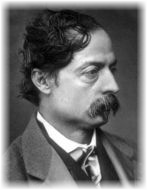
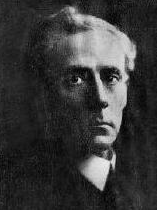
Between 1901 and 1902, a well known Australian artist called Ernest William Christmas visited England. Christmas had been appointed as the travelling art representative of the managers of the proposed Australian Federal and International Exhibition to be held in Melbourne, Australia, late in 1902 and had been entrusted with the task of selecting a collection of British and Continental pictures for inclusion in the exhibition. Eventually Christmas solicited and shipped back to Melbourne, some 270 valuable paintings, including around 100 by Scottish artists of the then flourishing Glasgow School and many by other notable Royal Academicians and regular RA Exhibitors such as; Sir Edward Poynter, Robert Walker Macbeth and of course, Frank Spenlove-Spenlove. Some of the other artists on the talent roster happy to allow paintings to go to Australia were; Sir James Guthrie, Sir John Lavery, John William Waterhouse, Alfred East and Sir Alfred Parsons, all who had consented to allow examples of their work to go for exhibition, but on the understanding that it was for the exhibition and displayed on 'exhibition terms'. Works worth well over £30,000.00 ~ even then and a fortune by today's standards.
|
|
Mr Christmas |
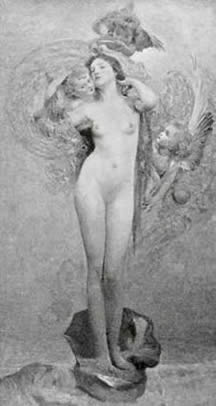
"Exhibition terms" This meant; "that should any gentleman wish to pay the asking price for the work," as strictly stipulated by the artist on a label on the back of the painting, "they would be allowed to purchase them outright, the artist accounted to and subsequently paid." The British artists also understood that the exhibition would eventually enjoy the patronage of the Commonwealth Government, so a great opportunity for them and fail safe you would think. Nothing could possibly go wrong! All appeared so until Frank Spenlove Spenlove was shown an alarming advertisement which appeared in the Melbourne Argus. It read: |
|
|
![]() |
* Thursday and Friday, February 19th and 20th. * The British Pictures ART NOTICE EXTRAORDINARY "Positively the greatest picture sale ever held in Australia" £30,000.00 worth of Academy Paintings At the Conservatorium of Music, Albert Street, East Melbourne Specially selected by Mr. E.W Christmas for the late Federal Exhibition To the public galleries, connoisseurs, lovers and patrons of art and others. "The L. White Agency Co. ( Auctioneer R A Whitehead ) Have pleasure to announce the great auction sale as above. "SPECIAL NOTICE" The auctioneers beg to state, that owing to the disastrous failure of the Federal Exhibition, Mr. Christmas has been in communication with the artists in England and the greater proportion of the marvellous collection is to be submitted to auction for absolute and positive sale.
|
Frank Spenlove-Spenlove immediately began communicating with his artist colleagues, to find out and formally challenge what had actually happened. No communication had been received by him from the organisers about the fate of the exhibition and none of his colleagues had been asked if they would allow the works to be auctioned off ! Matters became even worse and far more mysterious when Sir Edward Poynter RA, confirmed that he had received a letter from the organisers informing him that his works were on their way back to him ! All the artists were justifiably annoyed and many angered at the sudden turn of events and certainly miffed at the 'ungentlemanly conduct.' Was the advert simply a mistake, a hoax or a very suspect matter indeed ? Interestingly, no account or record can be found in the Melbourne Argus following the date of the proposed sale and we may never know if the RA's talented representatives ever did get their paintings back. But an interesting article which did appear, does give us some clues. (See below)
Frank Spenlove's entry, which has never resurfaced, was his Royal Academy Exhibited painting from 1901~ Gilded pastures, an autumn day, Picardy
A full List & Prices of works exhibited at the Melbourne International Art Exhibition in 1902 is below:
|
|
| The Australian Federal International Exhibition 1902-3 | ![]() |
So why did it fail?
|
|
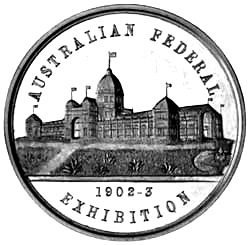
But Melbourne was suffering in a state of recession back in 1901, this grew worse into 1902 but she was rapidly falling into deeper depression by the year 1903 with the summer exhibition dragging its heels over the festive period. But that didn't stop the organisers striking a Gold medal to celebrate the occasion.
The State Governor at the opening of the fair, Sir George Clarke had commented in his opening address that;
He had simply got the whole and very real reasoning behind the true purpose of the Art Exhibition patently wrong. There were those however who had made a valiant effort to make their displays attractive. Cameras, surgical appliances, confectionery. You name it. Joubert had concentrated hard on entertainment though and had much for his viewing public to enjoy with side shows; Including a militerama display, a pantoscope or panoramic camera, a palmists parlour, a German Bier Halle, which kept the weapons boys happy. There was a Parisian dinner hall and lots of tea rooms. Orchestras played and choirs sung, as the newly fashioned Vellodrome sported its trick cyclists.
The exhibition in its entirety, actually didn't fail as such and everyone had great holiday fun. The problem was that the sales of the paintings were meagre and that was all entirely down to public perception. The way the seasoned British thought, when attending an art exhibition such as those held each summer at the Royal Academy, was that you bought or could buy the paintings on offer by the artists. After all, it was an art exhibition and only the elite went to the Royal Academy Summer Exhibition and they had wallets. In Australia, it was different. The public went along for a blast.
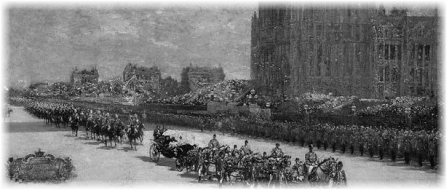
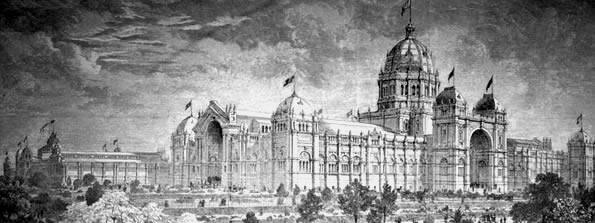
The Australian Federal International Exhibition, held in the Exhibition Buildings and grounds, Melbourne, Victoria in November and December of 1902 and in January 1903 was really a Worlds Fair. The art exhibition being only a part of it. In the main, those that did go, went just to look and it wasn't only art they went to see. The exhibition was really set up to promote Australian technology, industry, music and the dramatic arts and that also included literature and fine art. For thousands it was a holiday entertainment and show time, as well as a rare opportunity to see examples of art from some famous names. But after all, it wasn't famous art. There was all sorts to see and do after all:
|
|
A Newspaper article of the time Monday 27 October 1902.
MELBOURNE INTERNATIONAL ART EXHIBITION.
Mr. E. W. Christmas, the South Australian artist who proceeded to England two years ago to continue his artistic studies, has a returned from London by the mail Steamer ‘Ocean’, which arrived on Sunday evening. He had been entrusted with the onerous task of managing the great international art exhibition to be held in Melbourne shortly and for which he spent some months in Great Britain making a selection from among the best works of the great English and Scotch artists. During an interview on Sunday, Mr. Christmas stated that the collection of pictures he has secured comprises examples of art by the following Scottish artists: Alexander Kellock Brown, RI. ARSA. RSW.; David Fulton, RSW.; Archibald Kay, RSA. RSW.; Louise E. Parrian (one of the finest flower, painters in Great Britain); William Fulton Brown, RSW.; John Terry, RSW.; Robert Russell MacNee, RGI.; David Gould; Alexander Balfour Mc Kechnie, RSW.; John McEwan, R.S.W.; Alexander Mac Bride, RSW.; Robert Gemmell Hutchison RSA,; Alexander Brownlie Docharty; Joseph Morris Henderson, ARSA. RSA. John Henderson; James Coutts Michie. ARSA.; William Brassie Hole, R.S.A.; Robert McGregor; Alexander Ignatius Roche, R.A.; Sir William Quiller Orchardson, (Hon. RA.) Robert Buchan Nisbet, R.A.; Campbell Noble, R.A; William McTaggart, R.A.; (who is considered to be the finest and strongest of all Scottish landscape artists) Charles Martin Hardie, Henry Herschel Hay Cameron, RA.; William Beattie Brown, R.S.A.; Robert McGown Coventry and Thomas Hunt, R.S.W. Among the English collection are some pictures by much well known men as; David Farquharson, Robert W. Macbeth, John Charles Dollman, RWS, RI, ROI; 'It will be interesting to Australians to know,' said Mr. Christmas, 'that Sir Edwin Poynter's contribution is the 'Greek Dance,' which London critics say is his best the collection as a whole, will be the finest ever brought to Australia from a high standard point of view, and the galleries of the different states should not miss the opportunity of making some purchases. The result of this venture is being watched with keen interest in Great Britain.' 'Which do you consider the best picture ?
Others I might mention are a very fine example by A. Brownlie Docharty, who is about the best landscape man of tbe Glasgow School, entitled 'At Symington, Ayrshire;' 'Through leafy banks,' by J. Morris Henderson; 'Home from the pastures'—a beautiful Scotch landscape— by J. Cout Mitchie, 'Shrimp dredges,' by Robert McGregor, a picture 9 ft. by 7 ft, valued at £400. This latter gained the medal it the Paris Salon.
Mr. Christmas was modest about his own achievements. He spent seven months in Scotland, studying the Highlands, Highland cattle, and the general character of the Scottish scenery. He was an exhibitor at the Royal Institute of Painters at Glasgow, where be hung 'a scene of Aberfoyle and a twilight picture. He also sent these pictures to the Colonial Exhibition in Piccadilly last June, and The London Times characterised his twilight an an excellent production. In addition. Mr. Christmas held an exhibition of his own at Leeds and Liverpool, and in both cities bad very satisfactory sales.
The full List of works exhibited at the Melbourne International Exhibition in 1902 is daunting. Though some have surfaced over the years and others simply 'loaned' to the exhibition were returned to the painters and re exhibited, no record of the auction sale is evident and the works seem to have vanished into thin air and remain 'missing' Interesting...
Complete List to follow
© David Freeman: 2015 |