ROGUES GALLERY I


| |
ROGUES GALLERY I
|
| HOME |
|
Added & Altered Signature Canada's long lost Gainsborough Jacob Maris Edgar Degas Arthur Lismer
|
||
One of the most common frauds we see concerning paintings would be added or altered signatures applied to otherwise anonymous works.
A John Constable Fake
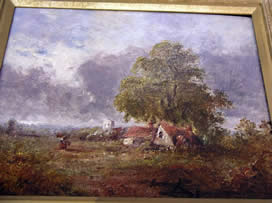
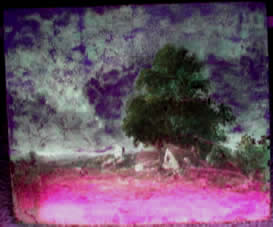
Take for instance this nice little English oil on wooden panel (below left) bearing the claimed to be legitimate signature of John Constable. Remember, generally a big name equals big money. I am not going into the physics of forensics and explain all about Ultra Violet light examination to you, but it is a certain way of finding out what's been added, or deleted from a painting, such as the adding of a signature! The dark purple areas on the second image shows where in-painting has take place over the years. Probably damaged paint flaking off and re painted by a conservator. On the next image below, can you spot what's been seriously messed around with in the bottom left hand side?
|
||
 |
 |
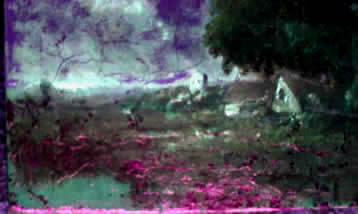 |
The whole bottom left of the picture, showing green on this photograph has been tampered with. The varnish stripped and the original signature removed in order for a new signature to be added. The only way to describe this act is that it was done by an unscrupulous individual determined to convince someone that this was an authentic John Constable painting and defrauding them.
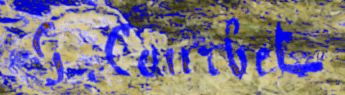
Gustave Courbet Fake Signature
A signature applied later that the painting it appears on, fluoresces with UV light. This 'applied' signature (above) added to a painting, took its potential value to six figures.
|
||
 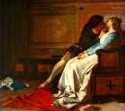 |
The artist: Prof. Amos Cassioli (1838-1891) Italian. The painting: Paolo & Francesca. Inspired by Dante, Canto V. Better known as: 'The Kiss' This painting was inherited and purchased before 1920 by a very notable Canadian personage and it surfaced recently in Canada. For us, it could be either Cassioli's second version of a similar work, or a fake as it was signed. It's in fact the the latter, suggesting a major fraud was committed and at a very high level, a long ,long time ago. |
|
It clearly had what was believed to be 'reliable' provenance. However, not only is the signature inconsistent with Cassioli's but the painting is simply a paler copy of the original and with some major errors in the drawing. Notably, the fresco patterns set into behind the couple on the wall differ considerably from the genuine piece. A little research showed that the original was in a museum in Italy! |
||
Is this Canada's long lost Gainsborough?
|
||
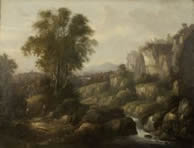
Thomas. Gains borough (1727-88). This is an oil painting 35 ½” x 27 ¼” executed on canvas. It appears to be circa 18C English school, depicting a tree lined gorge with stream and waterfall with figures on a track. This is set with mountainous Italiente background beyond. The work bears a serious signature - Thos.Gainsborough and is dated 1791 in the bottom left quadrant, inferring the authorship to the hand of one of the greatest British artists of the period. The added signature fluoresces in UV light like the Constable. It appeared darker than the original background which shows as a pale mush under UV inspection and was likely placed their by an unscrupulous dealer from whom it was purchased, way back at the turn of the century. |
 |
|
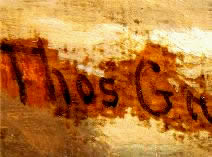 |
The painting had been cleaned but the conservator was concerned about cleaning off the varnish around the signature, so left it. It shows darker brown then the background. Look carefully at the enlarged Th (right) > of Thomas. You can still see the pencil construction marks under the top of the upper cross stroke of the letter 'T'. Pencil was all through the signature. Another added signature placed there to increase value. Now what artist would sign his name in pencil first and paint over the top of it afterwards? |
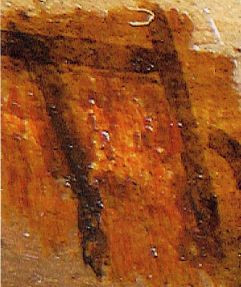 |
After further investigation, the work was attributed to Thomas Barker of Bath - a fine emulator of Gainsborough. |
Magnified x60 |
|
JACOB MARIS (1837-1899) Dutch
|
||
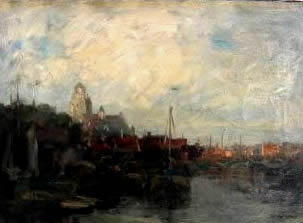
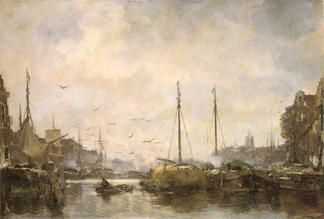
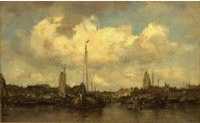
This oil painting signed 'J Maris' had the potential to be a very valuable piece indeed. The work is reminiscent of the Dutch town of 'Dordrecht' which Maris painted several times in his career. However this tower is not that of the Cathedral of Dordrecht. It has a flat top. Certainly there are elements of the two paintings below in this piece but its style and its signature varies considerably from that of Maris himself. This is more likely a 'capriccio', or fantasy view, of a Dutch town. Yet it's clearly signed 'J Maris' and the signature was applied when it was first painted, indicating another, but intentional early fraud. |
 |
|
 |
 |
|
Edgar Degas 1834-1917 French
|
||
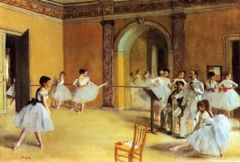
We have seen many fake works purportedly by Degas. They are mostly drawings in pastel and are the easiest to forge because you only have to copy. We were asked to examine what appeared to be a lovely 19 C. French school drawing, (below left) depicting a seated ballerina, clearly in the manner of Edgar Hillaire Degas. But the drawing was an individual study of the ballerina taken from the bottom right of 'Le Foyer de la danse à l’opéra de la rue le Pelletier' held by: Musée d'Orsay, Paris. The forger clearly wanted us to believe this was a study for the main work.
|
 |
|
 |
 |
|
| Ours was a similar seated figure to this, executed on pale green squared paper. Though the drawing we saw subtly varied. We found that the paper on which the piece we examined is executed is not commensurate with that used by Degas and was far too new, nor are the materials and the inscription that the piece bears, in his hand. | ||
Another Fake Signature - Dated 1933
|
||
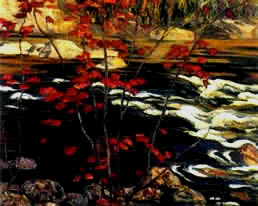
Add or change a signature and it almost certainly adds both perceived value and an actual value to a work of art. It is one of the most common 'deliberate' frauds we come across. We cannot show you an image of the whole painting as it is a matter of litigation, however, the case concerned a landscape by Canadian artist Arthur Lismer (1885-1969) a principal figure and artist from what is known as the Group of Seven in Canada. Artists whose works are making very high prices indeed. Here is a legitimate Lismer work. It's NOT the painting we examined. We questioned the style of the painting first. Although similar to his work, to us, it did not seem to be one created by Lismer. Frankly, it wasn't good enough. The signature itself didn't bear close scrutiny either. The differences are quite noticeable and we were drawn to the fact that the signature seemed to be incised or scratched into the paint surface. |
 |
|
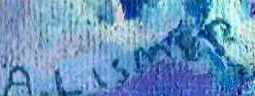 |
A questionable signature to the left, this one from the actual painting and a legitimate signature above, very clear constructional differences. |
|
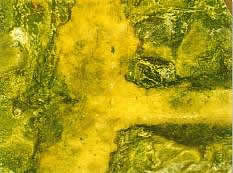
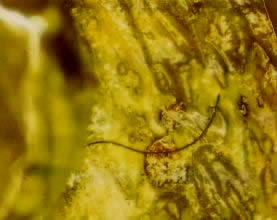
As the macro enlargement (above right in yellow)) shows, you can just make out where the edges of the paint are 'ragged' and sharp. A good indicator that the paint was dry when the letters were gouged into its surface! We looked harder and closer. Microscopic examination of the surface of the painting revealed paint brush fibres, not in the varnish, but embedded in the paint itself (right.) Its tubular structure indicated that it was a synthetic, or acrylic hair. Evidence that this is a work from the 1960's. It therefore cannot have been painted in 1933 as it was dated! |
 |
|
Above: Acryllic brush hair in the paint! |
||
LINKS TO SPECIALISMS / GENRES
|
||
| EUROPEAN ART - AUTHENTICATION | ||
| SCOTTISH ART | ||
| ITALIAN ART | ||
| CUBAN ART AUTHENTICATION | ||
| CURRENT INVESTIGATIONS | ||
|
||
Rogues Gallery 1 || Fake Paintings - Degas - Constable - Maris - Lismer - Cassioli - Gainsborough || International Art Fraud Investigators Freemanart Consultancy fakes, fake, painting, paintings, print, dali, picasso, gainsborough, cassioli, kiss, altered signatures, fake signatures, about fakes, john constable, maris, cappricio, dordrecht, lismer, cathedral. degas, pastel, ballerina Fake Paintings - Rogues Gallery. Freemanart Consultancy:Archives case studies: Degas, Gainsborough, Maris, Constable, Cassioli and Lismer fakes. |